Building a solar farm isn’t as simple as putting panels in a field. It takes planning, problem solving, and a whole lot of teamwork.
Building a solar farm isn’t as simple as putting panels in a field. It takes planning, problem solving, and a whole lot of teamwork. From digging trenches to connecting cables to testing equipment, many skilled people worked together to turn an empty piece of land into Saskatoon’s largest solar power source. Their hard work helps our city make clean electricity from sunlight, and it shows what we can accomplish when everyone brings their strengths to the same goal.
The Dundonald Avenue Solar Farm began as a wide, unused stretch of land left over from the Circle Drive South project. In 2017, the City of Saskatoon set this land aside for something new—an energy project that would help the city move toward a cleaner future. But before any building could start, experts needed to figure out whether a solar farm would work there. A feasibility study in 2020 looked at sunlight levels, costs, and how the electricity could connect to the city’s grid. Once the study showed the project was possible, planning moved ahead.
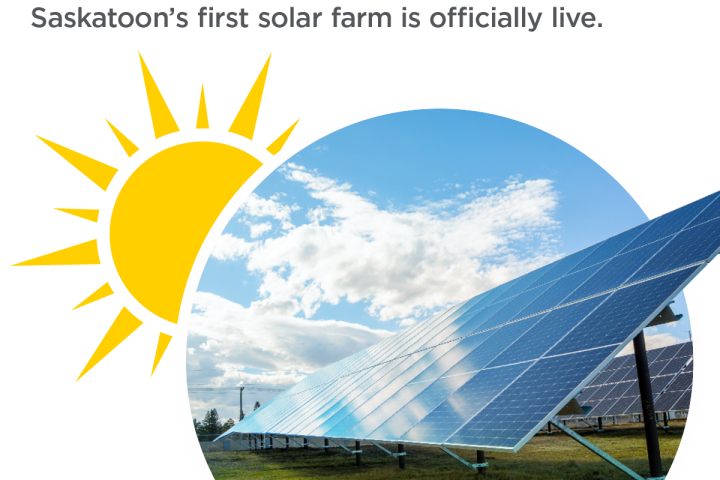
Hello, Sunshine! Saskatoon’s first solar farm is officially live.
In 2021, people living and working near the site were invited to share their thoughts. Their feedback helped shape the final design. After that, City Council approved the project and set aside funding so construction could begin.
Before workers could even step onto the site, a railway crossing had to be safely reestablished. This meant studying how vehicles and equipment would cross the tracks and making sure everything met safety standards. Once that was complete, the City searched for a contractor who could design and build the solar farm. Several design options were reviewed to make sure the final choice would produce as much clean energy as possible.
Construction officially began in the summer of 2025. First, crews prepared the land and installed the underground cables that would carry electricity from the solar panels to the power grid. Trenches were dug, foundations were set, and the layout of the solar farm took shape. Next came the installation of more than 4,500 solar panels, each carefully mounted and angled to capture the most sunlight.
As the panels went up, other teams worked on the equipment that would help the solar farm operate. Inverters were installed to change the electricity from direct current (DC) to alternating current (AC). Transformers were added to boost the voltage so the power could travel safely through Saskatoon Light & Power’s system. Once everything was in place, the equipment was tested and re-tested to make sure it worked perfectly. Naturalized landscaping elements were added to boost biodiversity, enhance soil health, and reduce erosion.
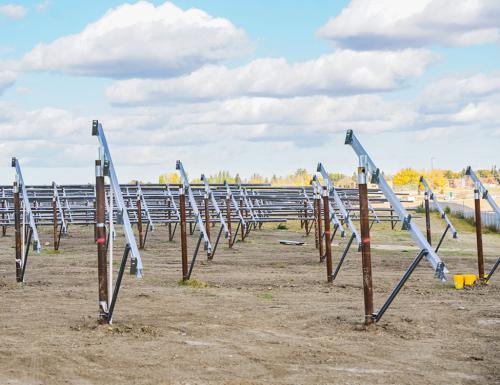
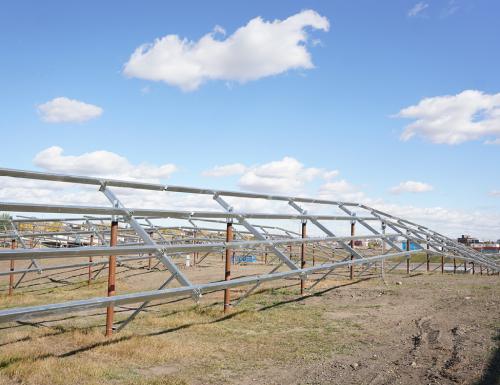
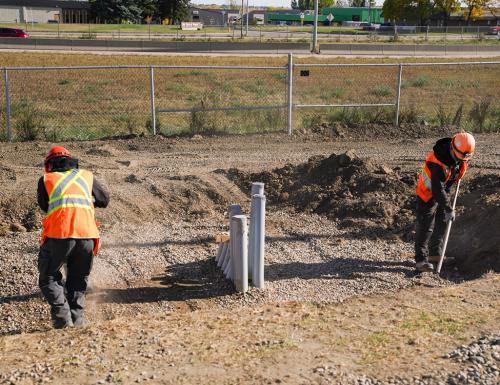
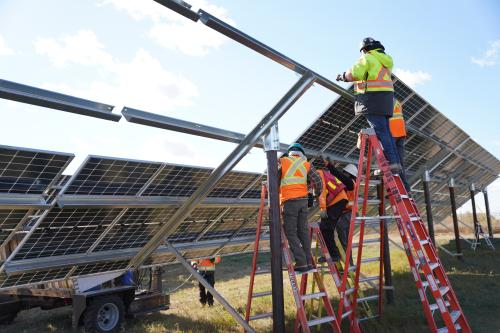
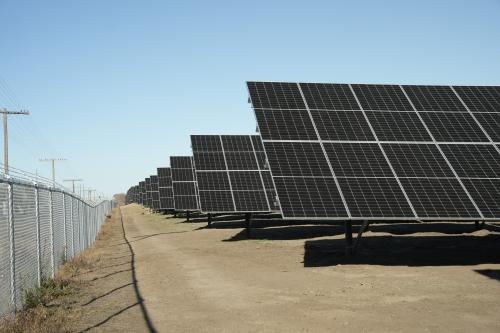
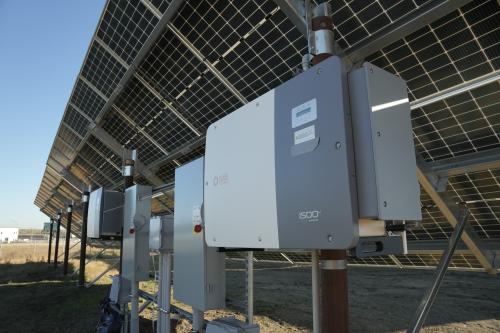
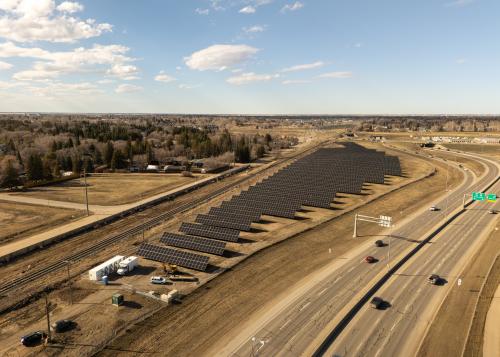
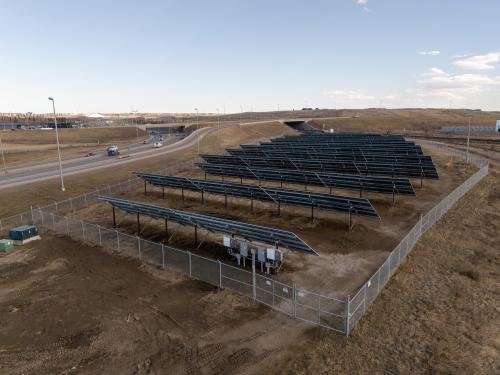
By early 2026, the Dundonald Avenue Solar Farm was complete. What started as an empty field has become a powerful source of clean, renewable energy—one that will help power Saskatoon homes and reduce emissions in Saskatoon for decades to come.