A historic elm tree in Saskatoon’s nationally recognized Memorial Avenue of Trees, planted to honor First World War casualties, must be removed after testing positive for Dutch elm disease, though the City remains committed to protecting and replacing memorial trees to preserve this important legacy.
Some trees are more than trees.
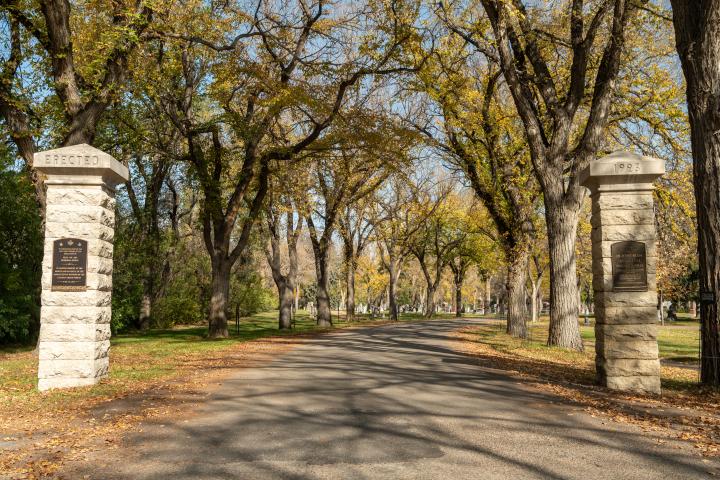
At Woodlawn Cemetery, one elm stands as a living memorial to those lost in the First World War. Sadly, after testing positive for Dutch elm disease, that tree must now be removed to help protect other elms nearby.
The tree is part of the Memorial Avenue of Trees, a historic collection planted to honour servicemen and women who never returned home from the war.
“This is a difficult thing to have to do and an action we have to take with a heavy heart,” says Parks Director Thai Hoang. “While any historic elm that must be removed is a loss, this hits a bit harder.”
The positive test result was confirmed earlier in July. Under the City’s response plan for Dutch elm disease, infected trees must be removed right away. The disease can spread quickly between elm trees through connected root systems and by elm bark beetles.
The City has worked to protect these historic trees, including treating them to help reduce the risk of infection. But no treatment can guarantee complete protection.
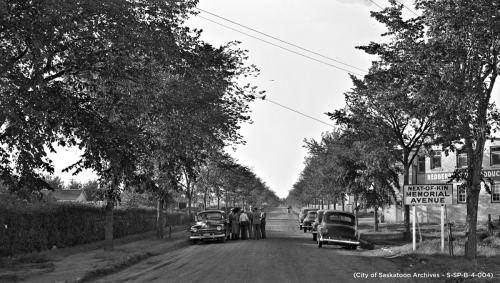
The Memorial Avenue of Trees was created in 1923 at the urging of the Imperial Order of the Daughters of the Empire, as a memorial to those who had fallen during the Great War of 1914-1918. Until 1970, Canadian soldiers were buried where they fell. The memorial trees, dedicated to individual soldiers, gave families that had no grave to visit a place to remember loved ones who died overseas. The first 266 trees were dedicated in 1923. Since then, new trees have been added every year. Today, there are more than 1200 trees standing in silent memory of Canada’s fallen.
“It wasn’t simply a public memorial, but an intensely personal one,” says City Archivist Jeff O’Brien. “There would be no grave here in Saskatoon for people to stand at, no place to put flowers on, but you could have a tree in Woodlawn Cemetery growing in memory of the person that had been lost.”
The tree being removed honours the “Officers of the “Scotland Forever Camp”, While it is not dedicated to a single individual, O’Brien says its meaning is just as important.
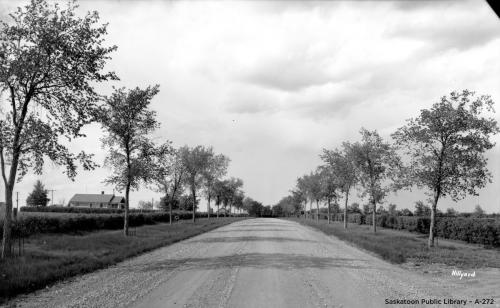
The Memorial Avenue of Trees is also unique. O’Brien notes that similar memorials once existed in other Canadian cities, part of a larger “Roads of Remembrance” movement that saw trees planted along roads in a number of Canadian cities. But most have disappeared over time, victims of development, street widening, neglect and even vandalism. The decision by City Council to place Saskatoon’s Memorial Avenue in a cemetery means that it is the only one still standing, and it was recognized as a National Historic Site in 1992.
While the loss is significant, the story of the memorial will continue. In 1922, when plans for Memorial Avenue of Trees were being finalized, City Council promised that trees along the avenue would be replaced when needed. That commitment remains today.
The removal of this memorial tree is a sad reminder of the threat posed by Dutch elm disease. While one historic tree will be lost, efforts to protect and replace trees along the Memorial Avenue of Trees will help preserve this important piece of Saskatoon’s history for future generations.
To learn how you can help protect Saskatoon’s elm trees from Dutch elm disease, visit saskatoon.ca/dutchelmdisease.